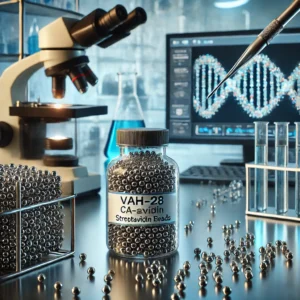
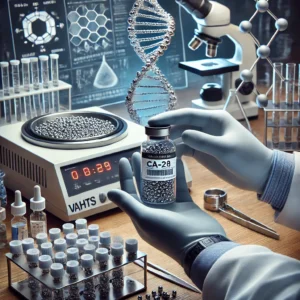
Streptavidin is a biotin-binding protein that has become a cornerstone in molecular biology and biochemical research. The VAHTS CA-28 Streptavidin Beads are specially designed to leverage this powerful interaction for various applications, including nucleic acid purification, protein isolation, and molecular diagnostics. These beads offer exceptional performance in capturing and separating biotinylated molecules, which is critical for enhancing the efficiency and accuracy of experimental procedures.
The Biotin-Streptavidin Interaction
The biotin-streptavidin interaction is one of the strongest non-covalent bonds in nature, with a dissociation constant (Kd) in the femtomolar range. This strong affinity is what makes streptavidin-coated beads, like VAHTS CA-28, highly effective for use in various biochemical assays. The National Institutes of Health (NIH) provides comprehensive information on the molecular mechanisms underlying this interaction, highlighting its significance in both basic and applied sciences.
Applications in Nucleic Acid Purification
One of the primary applications of VAHTS CA-28 Streptavidin Beads is in the purification of nucleic acids. The beads are particularly useful in polymerase chain reaction (PCR) workflows, where they can selectively bind to biotinylated primers or probes, facilitating the efficient recovery of specific DNA or RNA sequences. This selective binding capability is crucial in next-generation sequencing (NGS) applications for library preparation and target enrichment, which are discussed in detail in resources from the National Center for Biotechnology Information (NCBI).
Role in Protein Isolation and Analysis
In addition to nucleic acid applications, VAHTS CA-28 Streptavidin Beads are invaluable in protein studies. They are commonly used in Western blotting and enzyme-linked immunosorbent assays (ELISA) to capture and isolate biotinylated proteins or antibodies. This application is particularly useful in clinical diagnostics and research focused on understanding disease mechanisms. The Food and Drug Administration (FDA) provides guidelines on the use of such assays for diagnostic purposes, ensuring accuracy and reliability in clinical settings.
Use in Chromatin Immunoprecipitation (ChIP)
Chromatin immunoprecipitation (ChIP) is a widely used technique for studying protein-DNA interactions. VAHTS CA-28 Streptavidin Beads play a crucial role in this process by capturing biotinylated antibodies that are bound to DNA-protein complexes. This technique is vital for understanding the regulatory mechanisms of gene expression, particularly in the context of epigenetics, as explored by the National Human Genome Research Institute (NHGRI).
Integration in CRISPR-Cas9 Technology
The beads are also integral to CRISPR-Cas9 gene-editing workflows, where they can be used to purify biotinylated guide RNAs or repair templates, enhancing the precision of genome editing. This application has significant implications for gene therapy and functional genomics research. The U.S. Department of Health and Human Services (HHS) provides detailed resources on the ethical considerations and guidelines for CRISPR research and clinical applications.
Enhancing Diagnostic Assays
In the field of diagnostics, VAHTS CA-28 Streptavidin Beads are employed in various assays to improve sensitivity and specificity. For instance, they are used in fluorescence-activated cell sorting (FACS) and flow cytometry for the enrichment of cell populations based on biotinylated markers. The Centers for Disease Control and Prevention (CDC) provides extensive resources on the application of these techniques in infectious disease research and monitoring.
Advancements in Therapeutic Research
The role of streptavidin beads extends into therapeutic research, where they are used to develop novel drug delivery systems. By conjugating therapeutic agents to biotinylated molecules, researchers can utilize VAHTS CA-28 Streptavidin Beads to enhance the targeting and delivery of drugs to specific tissues or cells. This is particularly relevant in cancer therapy, as explored in resources from the National Cancer Institute (NCI).

Optimization of Experimental Protocols
To maximize the efficiency of VAHTS CA-28 Streptavidin Beads, researchers should carefully optimize experimental conditions, including bead concentration, incubation time, and buffer composition. Protocols provided by the National Institute of Standards and Technology (NIST) offer valuable guidance on standardizing these parameters to ensure consistent and reproducible results across different laboratories.
Future Perspectives
The development of VAHTS CA-28 Streptavidin Beads represents a significant advancement in the toolkit available to researchers in molecular biology and biomedical sciences. As new applications continue to emerge, these beads are expected to play a critical role in advancing our understanding of complex biological systems and in the development of new therapeutic strategies. The Office of Science and Technology Policy (OSTP) provides forward-looking insights on the impact of such technologies in driving innovation and scientific discovery.
Conclusion
VAHTS CA-28 Streptavidin Beads are a versatile and powerful tool for a wide range of applications in modern research. By enabling the selective capture and separation of biotinylated molecules, these beads enhance the efficiency, sensitivity, and reliability of numerous assays and experimental workflows. Researchers are encouraged to explore further details and standardized protocols available on various academic and governmental websites, such as PubMed and Grants.gov, to fully leverage the capabilities of these advanced research tools.


Leave a Reply