Introduction
qPCR Master Mix is a pre-formulated solution used in quantitative polymerase chain reaction (qPCR) assays, designed to streamline and enhance the process of DNA amplification and quantification. qPCR, also known as real-time PCR, is a powerful technique for detecting and quantifying nucleic acids, widely used in diagnostic research, molecular biology, and clinical laboratories. The Master Mix includes essential components such as DNA polymerase, dNTPs, buffer, and other reagents that ensure reliable and accurate results across various applications.
For more information about PCR techniques, visit CDC and NIH.
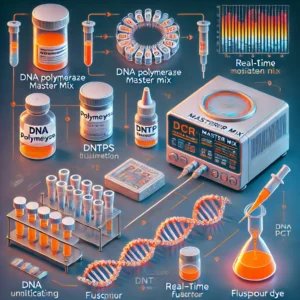
Components of qPCR Master Mix
- DNA Polymerase: The enzyme responsible for synthesizing new DNA strands by adding nucleotides to a template. qPCR Master Mix typically includes a heat-stable polymerase like Taq DNA polymerase.
- dNTPs (Deoxynucleotide Triphosphates): The building blocks for new DNA strand synthesis, ensuring efficient amplification.
- Buffer Solution: Maintains the optimal pH and ionic strength necessary for the enzymatic reaction, which is critical for consistent results.
- MgCl₂ (Magnesium Chloride): Acts as a cofactor that enhances enzyme activity, facilitating efficient DNA replication.
- Fluorescent Dye or Probe: Used for real-time monitoring of DNA amplification. Common dyes include SYBR Green, or probes such as TaqMan for specificity.
To understand the components in detail, refer to FDA and WHO.
Applications of qPCR Master Mix
qPCR Master Mixes are versatile and used in a wide range of applications:
- Gene Expression Analysis: Allows the quantification of mRNA levels to study gene activity.
- Pathogen Detection: Identifies the presence of viral, bacterial, and fungal DNA/RNA, essential in clinical diagnostics for diseases like COVID-19, influenza, and tuberculosis. See more about pathogen detection on CDC.
- Genotyping: Detects variations in DNA sequences, useful in genetic testing, forensics, and personalized medicine.
- Copy Number Variation (CNV) Analysis: Measures variations in the number of copies of a particular gene, aiding in research on genetic disorders and cancer.
For additional insights on the applications of qPCR, explore research on NCBI and NIH.
Key Features of qPCR Master Mix
- High Sensitivity: Capable of detecting even small amounts of nucleic acids, making it suitable for diagnostic assays.
- Specificity: Designed to minimize non-specific binding, leading to accurate and reliable results.
- Speed and Efficiency: Pre-mixed formulation simplifies the setup, reducing preparation time and the risk of pipetting errors.
- Versatility: Compatible with a wide range of qPCR instruments and various real-time detection methods, including SYBR Green and probe-based assays.
For more details on qPCR performance, refer to PubMed and EMBL.
Best Practices for Using qPCR Master Mix
- Template Quality: Ensure that DNA/RNA templates are of high purity and free from inhibitors.
- Proper Reaction Setup: Follow recommended protocols for reaction volumes, component concentrations, and cycling conditions to achieve optimal results.
- Avoiding Contamination: Utilize separate workspaces for sample preparation and qPCR setup to minimize cross-contamination risks.
- Consistent Experimental Conditions: Use the same Master Mix across all experiments to reduce variability and improve reproducibility.
To read more about best practices, check guidelines from FDA and NIH.

Choosing the Right qPCR Master Mix
When selecting a qPCR Master Mix, consider the following:
- Compatibility with Instruments: Ensure the mix is compatible with your qPCR system.
- Detection Method: Choose between dye-based or probe-based mixes depending on the experiment’s requirements.
- Application-Specific Mixes: Some mixes are optimized for specific applications, such as multiplexing or fast-cycling reactions.
Refer to manufacturer instructions and product datasheets available on CDC and FDA for specific details.
Conclusion
The qPCR Master Mix is a critical component in molecular diagnostics and research, enabling the precise amplification and quantification of DNA. Its pre-formulated design ensures consistency, reliability, and ease of use, making it suitable for a range of applications from gene expression studies to clinical diagnostics. With continued advancements, qPCR Master Mixes are becoming more refined, allowing researchers and clinicians to achieve faster, more accurate results.
For more information on qPCR technology and protocols, visit NIH, CDC, and WHO.


Leave a Reply