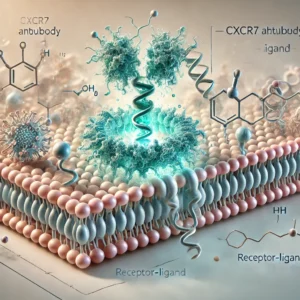
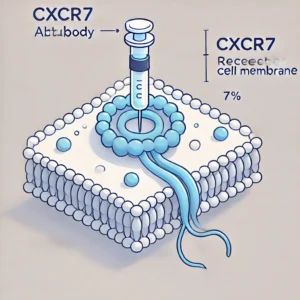
The C-X-C chemokine receptor type 7 (CXCR7), also known as ACKR3 (Atypical Chemokine Receptor 3), has emerged as a vital molecule in the study of cellular signaling and pathology. This G-protein-coupled receptor interacts primarily with chemokines CXCL12 (stromal cell-derived factor-1) and CXCL11, playing key roles in angiogenesis, immune response modulation, and cell migration. The CXCR7 antibody serves as a precise and reliable tool in the exploration of these mechanisms across various disciplines, including oncology, immunology, and neurobiology.
Role of CXCR7 in Biological Systems
1. Cancer Progression
CXCR7 has been linked to tumor growth, survival, and metastasis, particularly in aggressive cancers like breast cancer, glioblastoma, and prostate cancer. Its overexpression correlates with enhanced tumor angiogenesis and immune evasion. Blocking CXCR7-mediated pathways has been shown to suppress tumor progression, providing a promising target for cancer therapy (National Cancer Institute).
2. Cardiovascular Development
CXCR7 is essential for cardiovascular development and repair, influencing processes like endothelial cell migration and heart valve formation. Research has demonstrated that CXCR7 expression is upregulated during tissue repair, making it a focal point for therapeutic angiogenesis studies (National Institutes of Health).
3. Neurodevelopment and Neuroprotection
In the nervous system, CXCR7 contributes to neural progenitor migration and synaptic signaling. Studies have also implicated it in neurodegenerative diseases, where targeting CXCR7 could enhance recovery from stroke and other ischemic injuries (PubMed).
4. Immune Regulation
CXCR7 plays a role in fine-tuning the immune response by modulating leukocyte trafficking and inflammation. This has implications in autoimmune diseases and infectious disease research (Centers for Disease Control and Prevention).
Applications of CXCR7 Antibody
1. Western Blotting
The CXCR7 antibody is widely used in Western blot assays to detect CXCR7 protein expression in different tissue and cell line samples. This application is instrumental in cancer and cardiovascular research (NCBI Proteins Database).
2. Immunohistochemistry (IHC)
Using CXCR7 antibodies in IHC enables visualization of receptor localization in formalin-fixed paraffin-embedded (FFPE) tissues, aiding in pathological evaluations (NIH Histology Resources).
3. Flow Cytometry
CXCR7 antibodies are used in flow cytometry for the identification and isolation of CXCR7-expressing cells. This application is essential in studying immune cell behavior and cancer cell migration (FDA Science Resources).
4. Enzyme-Linked Immunosorbent Assay (ELISA)
Quantitative ELISA assays using CXCR7 antibodies are employed to measure receptor levels in serum and tissue culture supernatants. This is crucial for pharmacokinetics and therapeutic monitoring (NIH Assay Development).
Research Highlights with CXCR7 Antibodies
1. Breast Cancer Therapy
Blocking CXCR7 activity in breast cancer models reduced tumor metastasis and vascular invasion. These findings underscore CXCR7 as a therapeutic target for combating aggressive cancers (Cancer.gov).
2. Stroke and Neuroprotection
Studies have shown that CXCR7 upregulation during ischemic injuries enhances neurogenesis and recovery. Targeting CXCR7 with specific antibodies may improve outcomes in stroke patients (NIH Stroke Resources).
3. Autoimmune Diseases
CXCR7 involvement in autoimmune diseases such as rheumatoid arthritis has been noted, where it modulates immune cell infiltration and inflammation. Antibodies targeting CXCR7 provide new avenues for therapeutic intervention (CDC Autoimmune Research).
Why Use CXCR7 Antibodies in Research?
- Specificity: The antibodies provide highly specific recognition of CXCR7, ensuring accurate and reproducible results in experimental setups.
- Versatility: They are compatible with multiple platforms, including Western blotting, IHC, and ELISA.
- Therapeutic Insights: By blocking CXCR7 activity, researchers can study its role in disease pathways, helping identify new therapeutic strategies (NIH Clinical Research Trials).
Future Directions
CXCR7 remains a promising target in diverse fields of research, from cancer to regenerative medicine. Advances in antibody engineering are likely to enhance the performance of CXCR7 antibodies, opening doors to personalized medicine and targeted therapies.
For further information and research-grade products, visit trusted sources like the National Institutes of Health, Centers for Disease Control and Prevention, and PubMed Central.


Leave a Reply